Introduction: Why Reducing Food Waste in Cloud Kitchens Matters
In today’s competitive food delivery industry, cloud kitchens—also known as ghost kitchens or virtual restaurants—have transformed the way people dine. Yet, with growth comes an important challenge: how to reduce food waste in cloud kitchens effectively while maintaining efficiency and profitability.
Globally, the food service sector generates nearly 30–40% of all food waste, and the UAE is no exception. According to the UAE Ministry of Climate Change and Environment, the country loses over 3 million tons of food each year, much of it from commercial kitchens. For cloud kitchens—where every gram of waste impacts margins—this problem cannot be ignored.
Reducing food waste isn’t just a sustainability goal; it’s a profit strategy. Waste costs money—wasted ingredients, energy, packaging, and labor. Every meal that goes uneaten reduces your bottom line. On the flip side, when you reduce food waste in cloud kitchens, you improve operations, strengthen your brand reputation, and appeal to sustainability-focused consumers.
In this comprehensive guide, you’ll discover five proven ways to reduce food waste in cloud kitchens and boost profits fast using modern tools, smart planning, and a sustainability-driven mindset.
1. Smart Inventory Management: The First Step to Reduce Food Waste in Cloud Kitchens
One of the biggest contributors to kitchen waste is poor inventory control. Without proper systems, ingredients expire, get misplaced, or are over-ordered. To reduce food waste in cloud kitchens, start with intelligent, data-driven inventory management.
Use AI-Powered Tracking Tools
Smart kitchens today use AI-based inventory systems such as MarketMan, FreshCheq, or Oracle Food and Beverage that provide real-time visibility into your stock. These platforms track ingredient levels, predict usage based on past sales, and alert your team when items are nearing expiry. This not only minimizes spoilage but also helps chefs plan dishes with precision.
Example: A cloud kitchen in Dubai adopted AI inventory software and reduced ingredient spoilage by 18% within three months—saving AED 40,000 in monthly costs.
Apply the FIFO Method
The First-In, First-Out (FIFO) approach ensures older stock is used before new supplies. Label every batch with the date received and expiry date. Rotate stock accordingly to prevent ingredients from being forgotten at the back of a freezer.
Automate Reordering
Automated reorder systems help align purchases with actual sales volumes. When your platform automatically restocks items only as needed, you maintain a lean, efficient supply chain—one of the smartest ways to reduce food waste in cloud kitchens.
Pro Tip: Integrate supplier dashboards to track delivery frequency, shelf life, and supplier performance. Better supplier insights mean less guesswork and less waste.
2. Menu Optimization and Portion Control: Cut Costs and Boost Profitability
Your menu and portion sizes play a massive role in determining waste output. Overly complex menus and inconsistent serving sizes are silent profit killers. To reduce food waste in cloud kitchens, it’s time to simplify and optimize.
Streamline Your Menu
A smaller, well-curated menu leads to smarter inventory use and reduced spoilage. Use sales analytics to identify your top-performing items and phase out low-selling dishes that require rare ingredients or occupy excess storage.
For example, many successful cloud kitchens in Dubai now offer “ingredient-modular menus”—where a single sauce or protein base serves multiple dishes (e.g., a tomato base for pizzas, pastas, and soups). This reduces perishable stock and makes it easier to manage supply levels.
Standardize Portion Sizes
Inconsistent portions cause waste and impact customer satisfaction. Using digital kitchen scales, pre-measured containers, or automated dispensing tools ensures consistency. Standardized portions not only reduce food waste in cloud kitchens but also guarantee uniform taste and presentation across orders.
Offer Portion Options
Let customers choose between small, regular, and large meals. This flexibility lowers plate waste and increases satisfaction for customers with smaller appetites. It’s an easy, customer-friendly way to reduce food waste in cloud kitchens while boosting profits.
3. Predictive Analytics: Use Data to Reduce Food Waste in Cloud Kitchens
Data is your best friend when it comes to forecasting demand. Cloud kitchens generate vast amounts of information—from order patterns to peak delivery hours. When analyzed correctly, this data can dramatically reduce food waste in cloud kitchens.
Study Historical Data and Trends
Analyze past sales data to understand demand cycles. Which dishes sell most during weekends, holidays, or rainy days? Predictive analytics platforms like BlueCart or DataRobot use this information to help chefs plan quantities accurately, reducing over-production.
Example: During Ramadan, demand for traditional meals spikes, while during summer months, smoothie orders rise. By aligning purchasing and prep to these patterns, you can reduce food waste in cloud kitchens by up to 25%.
Include Weather and Events in Forecasting
External factors—such as weather, festivals, or sporting events—significantly affect food demand. Dubai kitchens that integrated weather data into their systems noted better accuracy in daily prep levels, preventing both shortages and waste.
Adjust Menus Dynamically
Predictive tools allow for real-time menu adjustments. When stock is running low, certain dishes can be paused temporarily. Likewise, if a surplus of certain ingredients exists, promotional pricing can encourage quick sales—both tactics that help reduce food waste in cloud kitchens.
4. Repurpose, Donate, and Compost: Sustainable Waste Management in Cloud Kitchens
Even with the best planning, some waste is inevitable. What separates a sustainable kitchen from an average one is how it handles leftovers. There are several responsible and profitable ways to reduce food waste in cloud kitchens at this stage.
Repurpose Leftovers Creatively
Use trimmings, off-cuts, or day-old items in new dishes. For example:
- Stale bread → croutons or breadcrumbs
- Vegetable peels → nutritious broth
- Cooked rice → fried rice or rice cakes
This not only reduces waste but also helps diversify menu offerings at minimal additional cost.
Donate Surplus Food
Partner with local food banks, charities, or NGOs such as Feeding UAE, Emirates Red Crescent, or Dubai Municipality’s Food Bank Program. These organizations ensure surplus but safe-to-eat meals reach people in need instead of landfills.
Food donation not only helps you reduce food waste in cloud kitchens but also enhances your brand’s social impact—aligning with UAE’s Zero Food Waste by 2030 initiative.
Compost Organic Waste
When food is no longer edible, composting is the most sustainable disposal method. Composting transforms organic waste into nutrient-rich soil that can be reused by farms or landscaping projects.
Use Food Waste Apps
Apps like Too Good To Go, Olio, or Karma allow businesses to sell surplus meals at discounted prices to consumers. This innovation helps reduce food waste in cloud kitchens while attracting environmentally conscious customers.
Pro Tip: Highlight your participation in food rescue apps in your marketing—it strengthens customer trust and contributes to positive online reviews.
5. Building a Waste-Conscious Team Culture
Technology and systems are essential, but people drive long-term change. To truly reduce food waste in cloud kitchens, your entire team must understand its importance and take ownership.
Conduct Regular Training Sessions
Hold weekly or monthly workshops on topics like:
- Proper ingredient storage
- Portioning techniques
- Waste tracking procedures
- Safe handling and labeling
Training empowers staff to identify potential waste areas early. Encourage them to suggest improvements—this involvement leads to a proactive, waste-aware culture.
Set Clear Waste Reduction Goals
Set measurable targets, such as “Reduce food waste by 20% in six months.” Display progress metrics on kitchen dashboards. Public tracking motivates your team and creates accountability, further supporting your mission to reduce food waste in cloud kitchens.
Reward Sustainable Behavior
Recognize employees who find creative ways to repurpose leftovers or optimize stock. Incentive programs—bonuses, awards, or recognition boards—boost morale and reinforce positive habits.
Create a Zero-Waste Policy
Establish and share a Zero-Waste Policy that outlines:
- Supplier sustainability criteria
- Composting and recycling commitments
- Guidelines for donations and repurposing
- Packaging sustainability standards
A documented policy increases your credibility and builds trust with partners, customers, and regulators.
Bonus: Tech Tools That Help Reduce Food Waste in Cloud Kitchens
Technology is revolutionizing kitchen sustainability. By integrating the right tools, you can track, analyze, and continually reduce food waste in cloud kitchens.
IoT Sensors and Smart Monitoring
IoT (Internet of Things) devices can monitor refrigeration temperatures, storage humidity, and ingredient freshness in real time. Any deviations trigger instant alerts, ensuring food stays safe and reducing spoilage risk.
AI Waste Tracking Systems
Platforms like Leanpath and Winnow use AI and image recognition to identify discarded items and calculate potential savings. The systems generate detailed reports that help chefs understand what’s being wasted most—and why.
Cloud-Based Waste Dashboards
Modern waste management platforms allow managers to visualize data across multiple locations. You can compare performance metrics, spot inefficiencies, and create strategies to further reduce food waste in cloud kitchens over time.
Conclusion: Sustainability and Profit Go Hand in Hand
The journey to reduce food waste in cloud kitchens is not just about being environmentally responsible—it’s a strategic business move. Every gram of food saved translates into improved margins, stronger efficiency, and higher brand reputation.
By implementing:
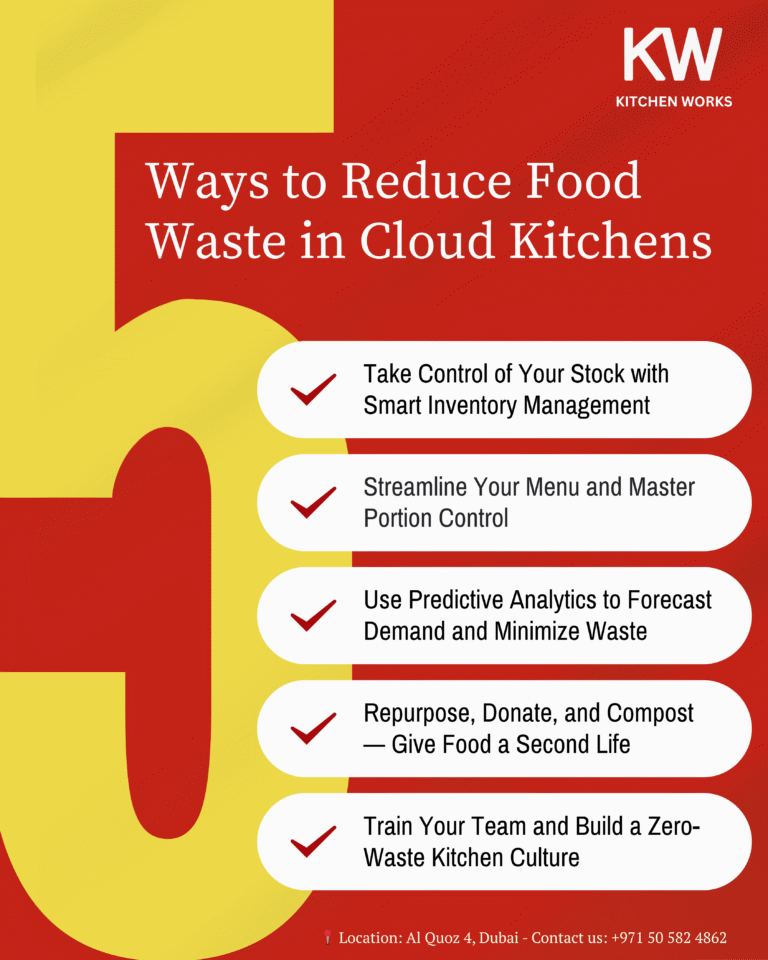
- Smart inventory management
- Menu optimization and portion control
- Predictive analytics for accurate forecasting
- Repurposing and donation programs
- A sustainability-driven team culture
—you can create a profitable, zero-waste cloud kitchen model that leads the future of the food delivery industry.
In a market like Dubai, where innovation defines success, sustainability is no longer optional—it’s essential. When you commit to reducing waste, you not only save costs but also show customers and investors that your brand stands for something bigger.
At Kitchen Works, we understand that reducing food waste in cloud kitchens is about more than saving money — it’s about creating smarter, more sustainable operations that benefit both your business and the planet. Our innovative food waste management solutions help cloud kitchens monitor inventory, track waste in real time, and implement efficient recycling and repurposing systems.
Whether you operate a single virtual brand or a multi-kitchen network, Kitchen Works provides the tools and expertise to help you reduce food waste, lower costs, and achieve your sustainability goals. Partner with us to turn your kitchen into a model of efficiency, responsibility, and long-term profitability.