The food industry is evolving faster than ever. Consumer behavior, digital ordering habits, and on-demand delivery have reshaped how food brands are built, tested, and scaled. For modern food entrepreneurs and established restaurant groups alike, the journey from an initial idea to full-scale production requires flexibility, speed, and operational efficiency.
This is where cloud kitchens are redefining growth strategies. Instead of relying on traditional restaurant expansion models, brands are now leveraging production-focused kitchen environments to move faster, adapt smarter, and scale sustainably. Understanding how Cloud Kitchens helps food brands transition from concept to consistent production is essential for anyone looking to grow in today’s competitive food landscape.
At Kitchen Works, we work closely with food businesses that want to turn ideas into scalable, high-performing brands — and cloud kitchens have become a critical part of that journey.
Supporting Food Brands at the Concept Development Stage
Every successful food brand starts with a strong concept. However, turning that concept into a market-ready offering often involves trial, refinement, and real customer feedback.
Reducing Early-Stage Barriers
One of the most important ways how Cloud Kitchens helps food brands is by removing the traditional limitations that slow down early development. Instead of committing to large dining spaces or complex operational structures, brands can focus purely on food creation and delivery performance.
This streamlined setup allows chefs and founders to:
- Test recipes in a real market environment
- Launch faster without long preparation timelines
- Validate demand before expanding further
By minimizing distractions and focusing on execution, food brands gain clarity early in their journey.
Encouraging Menu Experimentation
Cloud kitchens create an environment where experimentation is encouraged. Brands can adjust portion sizes, flavors, packaging, and presentation based on real-time feedback from delivery customers.
This ability to refine menus continuously plays a major role in how Cloud Kitchens helps food brands strengthen their positioning before entering large-scale production.
Creating a Strong Foundation for Scalable Production
Scaling a food brand requires consistency. Customers expect the same quality, taste, and experience with every order — regardless of volume.
Optimized Kitchen Workflows
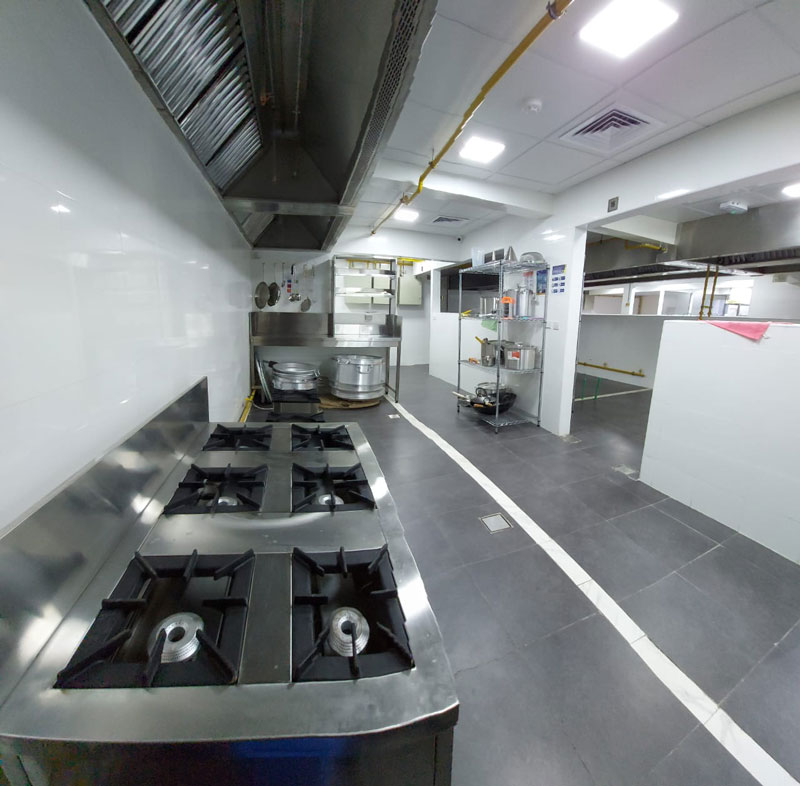
Cloud kitchens are designed specifically for production efficiency. Layouts are structured to support high-volume preparation, organized workflows, and minimal operational friction.
This production-first approach directly impacts how Cloud Kitchens helps food brands maintain quality while increasing output. With dedicated preparation zones and streamlined processes, teams can handle growth without compromising standards.
Standardization Across Operations
Standardization is a critical factor in scaling from concept to production. Cloud kitchens enable brands to document and replicate recipes, preparation steps, and quality benchmarks.
As a result, food brands gain:
- Consistent output across shifts
- Easier staff training
- Predictable customer experience
This consistency is a cornerstone of how Cloud Kitchens helps food brands grow sustainably.
Technology as a Growth Enabler
Technology is no longer optional in the food business — it is a competitive advantage.
Centralized Order Management
Managing orders from multiple delivery platforms can quickly become overwhelming. Cloud kitchen ecosystems solve this by integrating all incoming orders into a single system.
This centralized visibility improves speed, accuracy, and coordination, demonstrating another critical way how Cloud Kitchens helps food brands operate efficiently at scale.
Performance Insights and Data Visibility
Data plays a powerful role in decision-making. Cloud kitchens provide insights into:
- Order trends
- Peak demand times
- Menu performance
- Customer preferences
These insights allow food brands to optimize menus, improve production planning, and respond proactively to demand — reinforcing how Cloud Kitchens helps food brands make smarter growth decisions.
Expanding Reach Without Physical Limitations
Growth no longer depends on dining room size or foot traffic.
Reaching New Markets Faster
One of the most impactful examples of how Cloud Kitchens helps food brands is geographic expansion. Brands can serve multiple areas through strategically located production kitchens without opening traditional outlets.
This enables faster market entry and broader audience reach with greater operational control.
Running Multiple Concepts From One Kitchen
Cloud kitchens allow brands to operate multiple concepts from the same production space. This approach supports innovation while maximizing kitchen efficiency.
By launching complementary or niche brands, businesses diversify revenue streams — another powerful example of how Cloud Kitchens helps food brands grow intelligently.
Strengthening Brand Presence in a Digital-First World
Modern food brands live online. Discovery, ordering, and engagement all happen digitally.
Improved Online Visibility
Cloud kitchens are optimized for delivery platforms, making it easier for brands to appear in relevant searches and recommendations. This improves discoverability and brand recognition.
This visibility plays a vital role in how Cloud Kitchens helps food brands compete effectively in crowded digital marketplaces.
Customer Engagement and Feedback Loops
Digital ordering creates direct feedback channels. Reviews, ratings, and repeat orders offer valuable insight into customer expectations.
By leveraging this feedback, food brands continuously refine their offerings — reinforcing how Cloud Kitchens helps food brands stay aligned with consumer demand.
Operational Efficiency as a Growth Driver
Efficiency is essential for scaling production without increasing complexity.
Focus on Core Competencies
Cloud kitchens handle many operational elements behind the scenes, allowing brands to focus on food quality, branding, and customer experience.
This focus is central to how Cloud Kitchens helps food brands scale without operational overload.
Smoother Transition to High-Volume Production
As demand grows, production needs increase. Cloud kitchens are built to support this transition seamlessly.
Brands can increase output, refine workflows, and expand menus without disrupting operations — another key reason how Cloud Kitchens helps food brands succeed long term.
From Concept to Production: A Scalable Growth Path
Cloud kitchens act as a bridge between creativity and execution. They provide the structure needed to transform ideas into reliable, scalable food businesses.
By supporting innovation, standardization, and operational clarity, how Cloud Kitchens helps food brands becomes evident at every stage of growth.
At Kitchen Works, we see cloud kitchens not as a trend, but as a strategic foundation for the future of food production.
Final Thoughts
Understanding how Cloud Kitchens helps food brands scale from concept to production is essential in today’s delivery-driven food industry. From idea validation and production efficiency to digital growth and market expansion, cloud kitchens provide the infrastructure modern food businesses need to succeed.
For brands looking to grow smarter, faster, and more sustainably, cloud kitchens offer a clear path forward — and Kitchen Works is proud to be part of that transformation.
Frequently Asked Questions (FAQ)
1. How Cloud Kitchens helps food brands grow faster than traditional models?
Cloud kitchens remove many physical and operational barriers, allowing brands to launch, test, and scale quickly without being tied to dine-in infrastructure.
2. How Cloud Kitchens helps food brands maintain consistency during scaling?
Standardized workflows, optimized layouts, and data-driven insights ensure consistent quality even as production volumes increase.
3. How Cloud Kitchens helps food brands experiment with new ideas?
They allow brands to test menus, flavors, and concepts in real market conditions without long-term commitments.
4. How Cloud Kitchens helps food brands expand into new markets?
By enabling production closer to customers, brands can reach new areas efficiently without opening traditional outlets.
5. How Cloud Kitchens helps food brands improve operational efficiency?
Centralized order systems, optimized workflows, and operational support reduce complexity and improve productivity.