Starting a cloud kitchen in Dubai can be more affordable than opening a traditional restaurant, but choosing the right location is still one of the most important decisions you will make.
A cloud kitchen does not need a prime high-street storefront or an expensive dining area. However, it does need to be positioned where your team can prepare food efficiently and where delivery partners can reach your target customers quickly.
This is why a cloud kitchen location in Dubai can directly affect delivery times, customer satisfaction, operating costs, and ultimately your profitability.
In 2026, as delivery-first food brands, ghost kitchens, and commercial kitchens continue to grow, entrepreneurs are looking beyond simply finding the cheapest kitchen. They are asking a more important question:
Is this kitchen located in the right place for my customers and my business model?
Let’s explore why location matters and what you should consider before renting a cloud kitchen in Dubai.
Why Does Location Matter for a Cloud Kitchen?
For a traditional restaurant, location is largely about attracting people who walk or drive past.
For a cloud kitchen, the equation is different.
Your customers may never see your physical kitchen. Instead, they discover your brand through food delivery apps, social media, search engines and other digital channels.
That means your kitchen location needs to support the delivery side of your business.
A good location can help you:
- Reach more customers within your delivery radius
- Reduce unnecessary delivery distances
- Improve delivery times
- Control operational costs
- Access suppliers more efficiently
- Recruit kitchen staff more easily
- Handle higher order volumes
- Expand your delivery coverage
- Operate from a professional commercial facility
Dubai’s cloud-kitchen market has increasingly shifted toward delivery-focused operations, allowing food brands to operate without traditional customer-facing dining spaces.
1. Delivery Time Can Make or Break Your Food Brand
One of the biggest advantages of a cloud kitchen is convenience.
Customers order because they want food delivered to them without visiting a restaurant. That makes delivery time a critical part of the customer experience.
Imagine two brands selling similar burgers.
Brand A operates close to its main customer base and regularly delivers within a short distance.
Brand B operates much farther away and needs significantly more time to reach the same customers.
Even if both restaurants serve equally good food, Brand A may have an advantage because its food reaches the customer faster and with less risk of quality deterioration.
This becomes especially important for:
- Burgers
- Fried chicken
- Pizza
- Shawarma
- Desserts
- Healthy meals
- Breakfast
- Meal-prep businesses
- Catering orders
For delivery-first brands, the kitchen is effectively part of the delivery network.
2. Your Target Customers Should Influence Your Kitchen Location
There is no single “best” location for every cloud kitchen in Dubai.
The right location depends on who you are selling to.
For example, a premium healthy-meal brand may want access to areas with offices, professionals and higher-income residential communities.
A budget-friendly family food brand may prioritize densely populated residential areas.
A corporate catering business may prioritize access to business districts.
A late-night food concept may need a different delivery strategy again.
Before choosing a commercial kitchen in Dubai, identify your primary customer zones.
Ask:
- Where do my customers live?
- Where do they work?
- What areas generate the most orders?
- What delivery radius can my food quality support?
- How much am I willing to spend on delivery?
- Are my customers concentrated in residential or commercial areas?
The answers can help you narrow down the right kitchen location.
3. Al Quoz Can Be Strategic for Delivery-First Food Businesses
Al Quoz is one of the areas worth considering when looking for commercial kitchens in Dubai.
Its location provides access to several important residential and commercial districts, while its established industrial and commercial environment makes it suitable for businesses that require operational kitchen space rather than expensive customer-facing retail locations.
For a cloud kitchen, this can create an interesting balance:
You don’t necessarily need to pay for a premium restaurant storefront to access valuable customer markets.
Instead, you can operate from a professionally equipped kitchen and use delivery platforms and digital marketing to reach customers.
However, location should always be evaluated according to your actual delivery zones rather than choosing an area simply because it is popular.
4. Cheap Rent Does Not Always Mean Lower Costs
One of the biggest mistakes new food entrepreneurs make is choosing a kitchen purely because the rent looks cheap.
Suppose Kitchen A costs less than Kitchen B.
At first glance, Kitchen A appears to be the better deal.
But what happens if Kitchen A is far away from your primary customer base?
You may end up dealing with:
- Longer delivery distances
- Higher delivery costs
- Longer delivery times
- More complicated logistics
- Greater risk of food arriving in poor condition
- Fewer practical delivery orders within your ideal radius
A lower monthly kitchen rent does not automatically mean lower operating costs.
This is why entrepreneurs should calculate total operating economics, not just monthly kitchen rent.
The real question is:
How much will this location cost me to operate my food business successfully?
Cloud kitchens can reduce some of the upfront costs associated with traditional restaurants, but delivery commissions, logistics and operating expenses still need to be carefully considered.
5. Delivery Radius Matters More Than You Think
When choosing a cloud kitchen rental in Dubai, think about your ideal delivery radius before signing a contract.
A large delivery radius sounds attractive because it gives you access to more customers.
But expanding too far can create operational problems.
Food quality can decline during longer journeys. Delivery times can increase. Customers may become less satisfied, and your delivery economics may become less attractive.
Instead of asking:
“How many areas can I deliver to?”
Ask:
“Which areas can I serve consistently while maintaining food quality, delivery speed, and healthy margins?”
That is a much better question for a delivery-first business.
6. Your Kitchen Should Be Accessible to Delivery Riders
A cloud kitchen can have an excellent customer catchment area but still create operational problems if delivery riders struggle to access the facility.
When evaluating affordable cloud kitchens in Dubai, consider:
- Entry and exit routes
- Parking availability
- Rider waiting areas
- Loading and unloading access
- Traffic conditions
- Building accessibility
- Kitchen operating hours
- Pickup arrangements
Small delays during order pickup can become significant when you process dozens or hundreds of orders every day.
A professional kitchen should make the order handover process as smooth as possible.
7. Supplier Access Also Matters
Your food business doesn’t only depend on delivery customers.
You also need ingredients, packaging, cleaning supplies, equipment and other operational materials.
A strategically located commercial kitchen can make supplier deliveries and inventory management easier.
This is particularly important when your business starts growing.
A small food brand might manage inventory with a few deliveries per week.
A high-volume operation may need much more frequent stock movement.
Therefore, when comparing commercial kitchen rental in Dubai, consider both sides of the operation:
Supplier → Kitchen → Customer
Your location needs to support the entire chain.
8. Location Can Affect Your Ability to Scale
Your first kitchen might only handle a small number of daily orders.
But what happens when your business grows?
You may need:
- Additional preparation space
- More cooking stations
- Larger storage capacity
- More refrigeration
- Additional staff
- Multiple brands
- More delivery orders
- Extended operating hours
This is where choosing the right commercial kitchen space in Dubai becomes important.
A kitchen should not only work for your business today.
Ideally, it should support your next stage of growth.
This is one reason shared and purpose-built kitchen facilities can be attractive to growing food entrepreneurs. They can provide professional infrastructure without requiring the entrepreneur to build an entire restaurant operation from scratch.
9. Cloud Kitchens and Ghost Kitchens Depend on Digital Reach
A ghost kitchen does not rely on passing foot traffic in the same way as a traditional restaurant.
Its visibility comes from digital channels.
Customers might discover the brand through:
- Talabat
- Deliveroo
- Careem
- TikTok
- Influencer marketing
- Direct ordering
- Paid advertising
This means your physical location and digital marketing strategy need to work together.
For example, a kitchen may be located in an operationally efficient area, while the brand’s digital marketing targets specific residential communities within its delivery radius.
The kitchen provides the infrastructure.
Digital marketing creates demand.
Delivery connects the two.
10. Compliance Still Matters When Choosing a Location
Location isn’t only about customer reach and rent.
Your chosen premises must also be suitable for the activity you intend to conduct.
Dubai legislation requires an economic activity to have a designated location that is suitable for the licensed activity and meet the applicable requirements.
Food businesses also have to comply with applicable food-safety requirements and conditions associated with their food permits. Dubai’s Public Health Law places requirements on food-related establishments covering premises, facilities, equipment, hygiene and food-safety practices.
Therefore, don’t rent a space simply because it looks inexpensive.
Before committing, confirm that the facility and proposed activity are appropriate for your business and licensing requirements.
How to Choose the Right Cloud Kitchen Location in Dubai
Before signing a rental agreement, create a simple location checklist.
1. Define your target customer
Know exactly who you want to serve.
2. Map your main delivery areas
Identify the neighborhoods generating the most potential demand.
3. Compare delivery times
Don’t judge locations only by distance. Consider actual road access and traffic.
4. Calculate total operating costs
Include rent, utilities, delivery-related costs, staffing, supplies and other operational expenses.
5. Check kitchen facilities
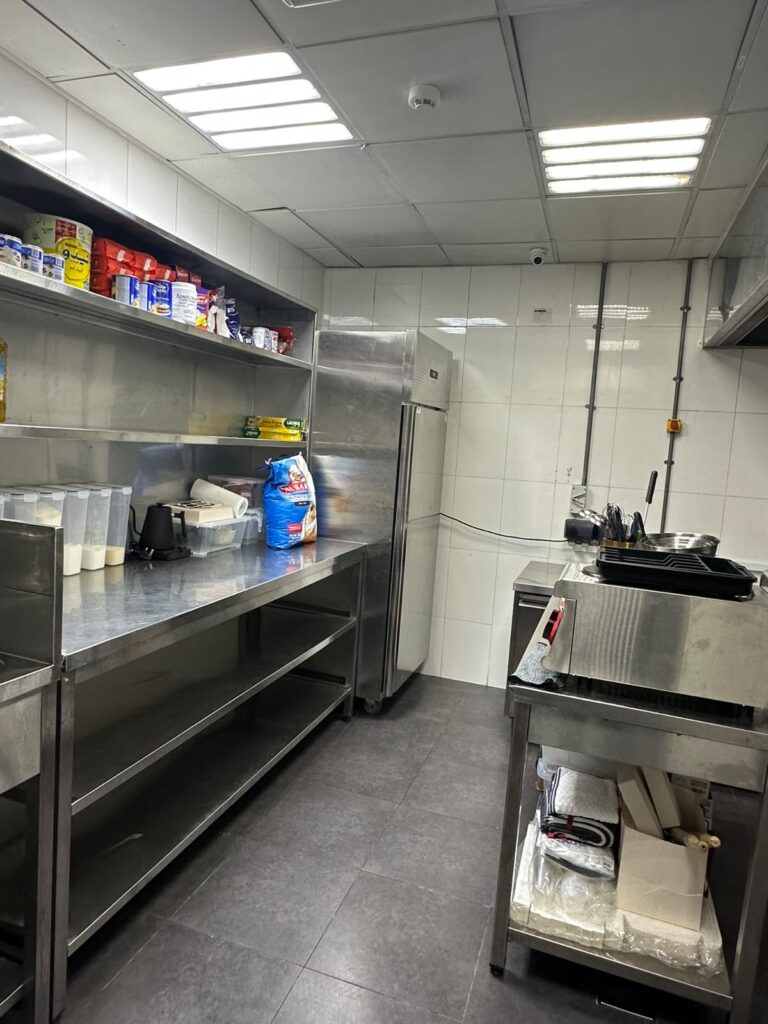
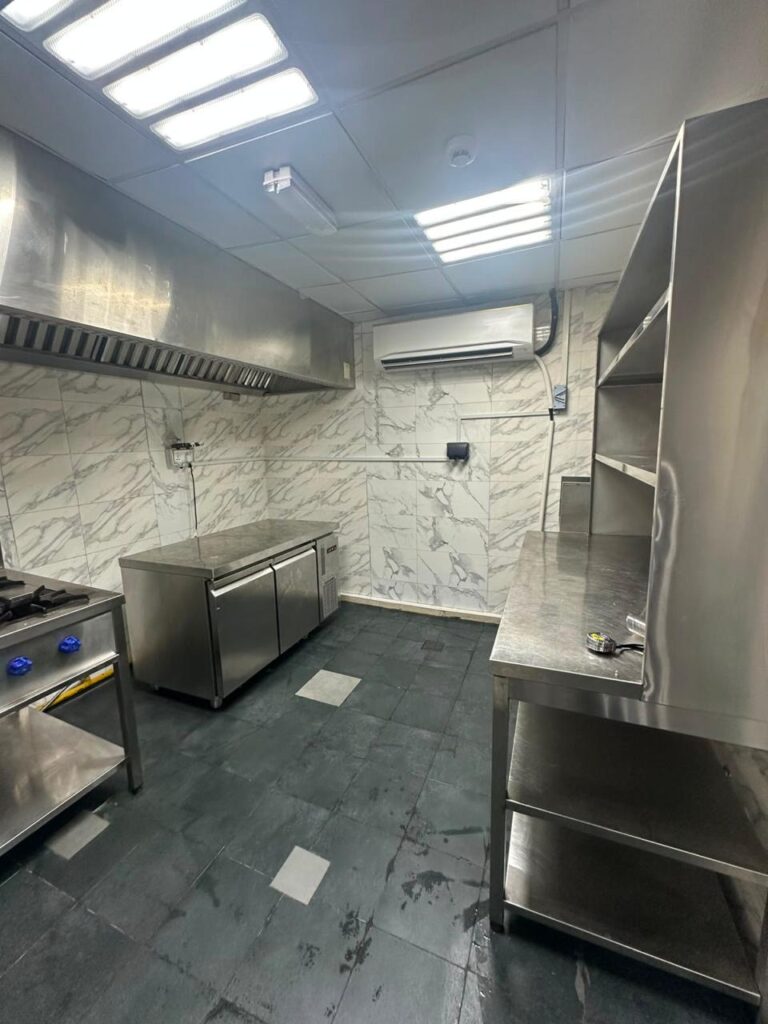
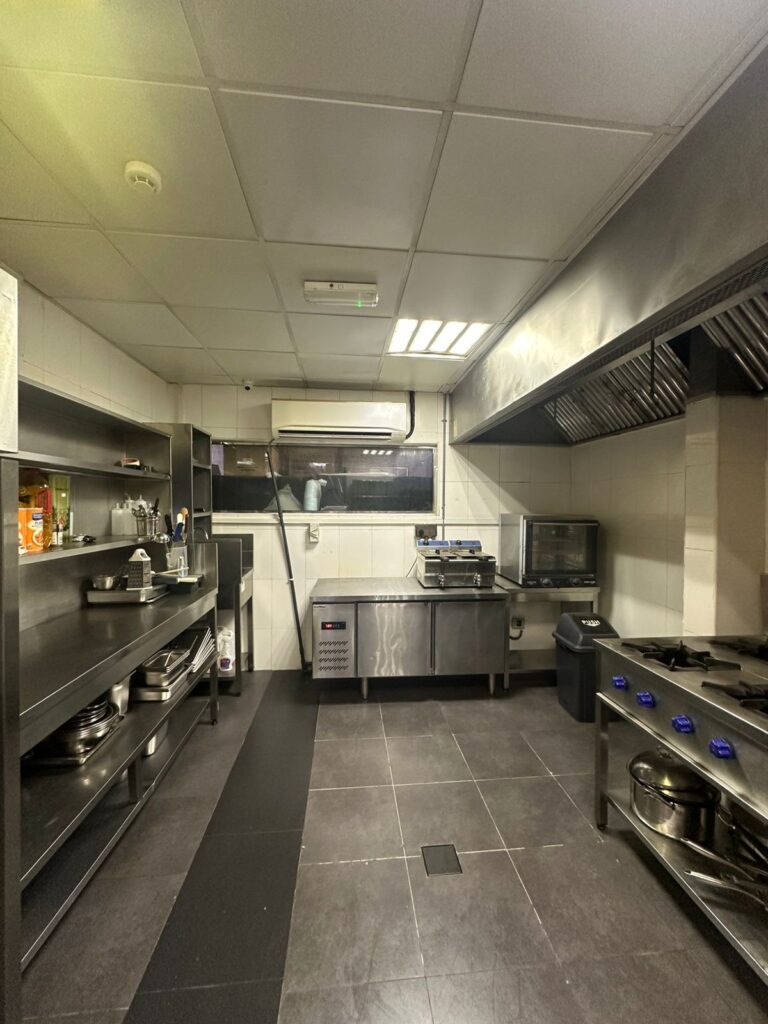
Look at cooking equipment, extraction, refrigeration, storage, preparation areas and cleaning facilities.
6. Evaluate rider accessibility
Make sure delivery partners can collect orders efficiently.
7. Think about future growth
Ask whether the kitchen can support higher order volumes or multiple food concepts.
8. Check compliance
Make sure the premises and activities meet applicable licensing and food-safety requirements.
Commercial Kitchen vs Traditional Restaurant Location
The location strategy for a cloud kitchen is fundamentally different from a traditional restaurant.
A traditional restaurant may prioritize:
Visibility + Foot Traffic + Parking + Dining Experience
A cloud kitchen may prioritize:
Customer Coverage + Delivery Time + Operational Efficiency + Kitchen Infrastructure
This difference can significantly change how entrepreneurs evaluate property.
You don’t necessarily need the most expensive retail location.
You need a location that makes sense for your business model.
Can an Affordable Cloud Kitchen Still Be in a Good Location?
Yes.
“Affordable” does not have to mean “far away.”
The goal is to find a kitchen where the overall economics make sense.
A good affordable cloud kitchen in Dubai should ideally combine:
- Strategic location
- Professional kitchen infrastructure
- Suitable delivery coverage
- Efficient operations
- Rental terms that fit the business plan
- Food-safety compliance
- Room for business growth
The cheapest kitchen may not be the most affordable option once all operating costs are considered.
The better approach is to find the best value for your business model.
Why Kitchen Works’ Location Matters
For food entrepreneurs looking for a commercial kitchen in Dubai, Kitchen Works provides purpose-built kitchen facilities in Al Quoz 4.
The location is designed around the needs of delivery-focused food businesses that need professional kitchen infrastructure without investing in a traditional customer-facing restaurant.
For entrepreneurs, this can provide a practical base for launching or expanding:
- Cloud kitchens
- Delivery-only restaurants
- Ghost kitchens
- Catering businesses
- Meal-prep brands
- Bakeries
- Food startups
- Multiple food concepts
The goal isn’t simply to rent a kitchen.
It is to create an operational base from which a food brand can serve its target market efficiently.
Final Thoughts
When starting a cloud kitchen in Dubai, location should never be treated as an afterthought.
Your kitchen location can influence delivery times, customer experience, operating costs, supplier logistics and your ability to scale.
At the same time, you don’t necessarily need a premium restaurant location.
The best location is the one that gives your business the right balance between customer reach, delivery efficiency, kitchen infrastructure, and cost.
Whether you are launching your first food brand or expanding an existing concept, take time to evaluate the location before committing to a kitchen.
Because in a delivery-first food business, your kitchen may not have a storefront — but its location still matters.
Frequently Asked Questions
Is Al Quoz a good location for a cloud kitchen in Dubai?
Al Quoz can be a strategic option for delivery-focused food businesses because of its commercial environment and access to several established residential and business districts. However, the right location ultimately depends on your target customers, delivery zones and operating model.
What is the most important factor when choosing a cloud kitchen location?
There isn’t one universal factor. Delivery coverage, customer proximity, total operating cost, accessibility, kitchen infrastructure and regulatory suitability should all be evaluated together.
Are affordable cloud kitchens in Dubai worth it?
They can be, particularly for entrepreneurs who want to avoid the larger upfront investment associated with a traditional restaurant. However, affordability should be assessed based on total operating economics rather than rent alone.
What is the difference between a cloud kitchen and a ghost kitchen?
The terms are often used interchangeably to describe delivery-focused kitchens that don’t operate as conventional customer-facing restaurants. The exact business model and terminology can vary between operators.
Do cloud kitchens need a physical location in Dubai?
Food businesses still need an appropriate premises and must meet applicable licensing and food-safety requirements. Dubai regulations require an economic activity to have a suitable designated location, while food-related establishments must comply with applicable food-safety requirements and permits.
Is location more important for a cloud kitchen than a restaurant?
The factors are different rather than simply more or less important. Restaurants often depend heavily on visibility and foot traffic, while cloud kitchens depend more on customer coverage, delivery efficiency, kitchen operations and digital demand.
Kitchen Works operates from Al Quoz 4. Confirm delivery coverage with the relevant platform or delivery provider rather than inferring it from driving distance. The current rental agreement is for 12 months, and a move to a larger or different unit depends on suitability and availability. Read the Al Quoz kitchen guide and current rental FAQs when comparing the specific offer.