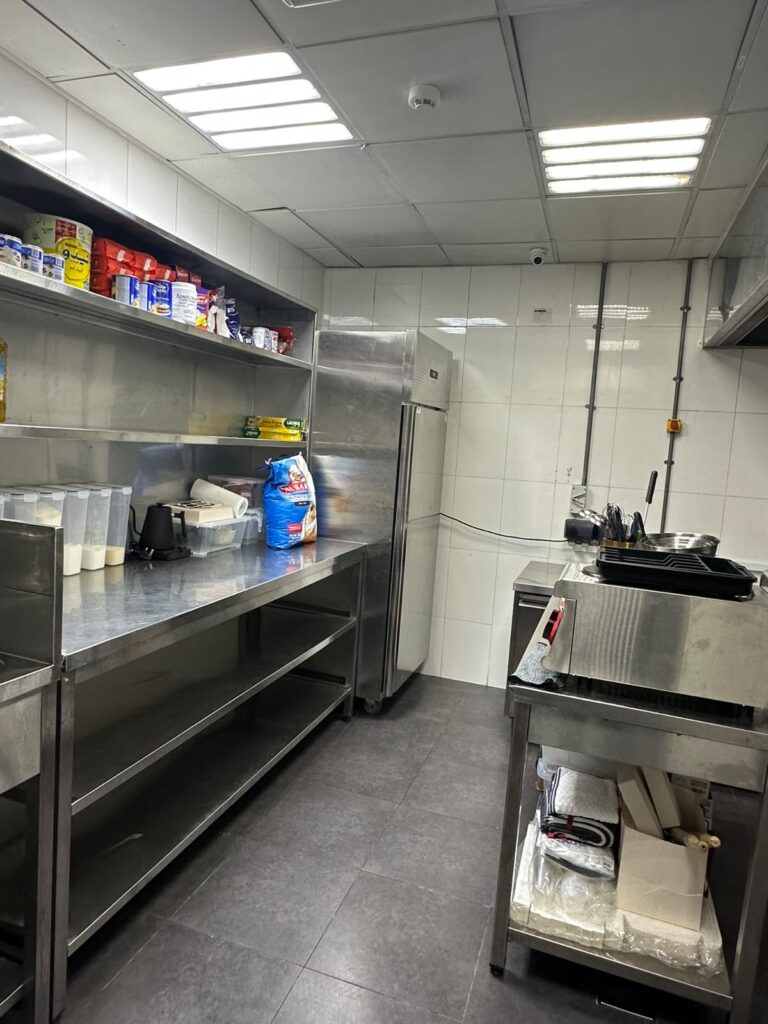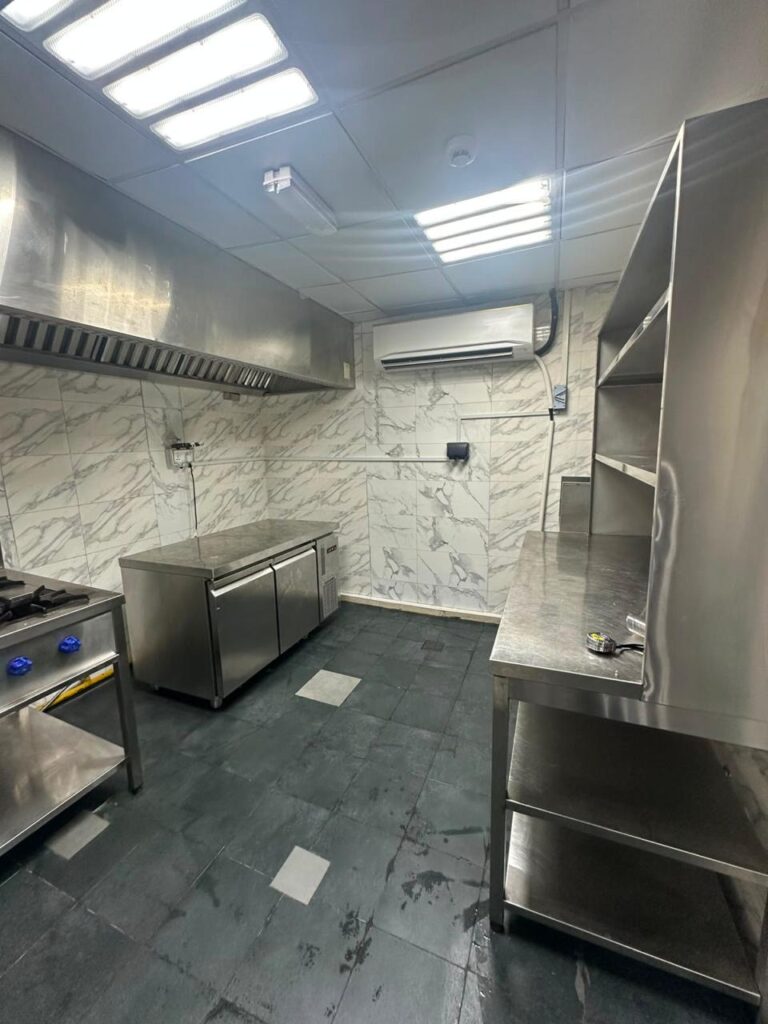
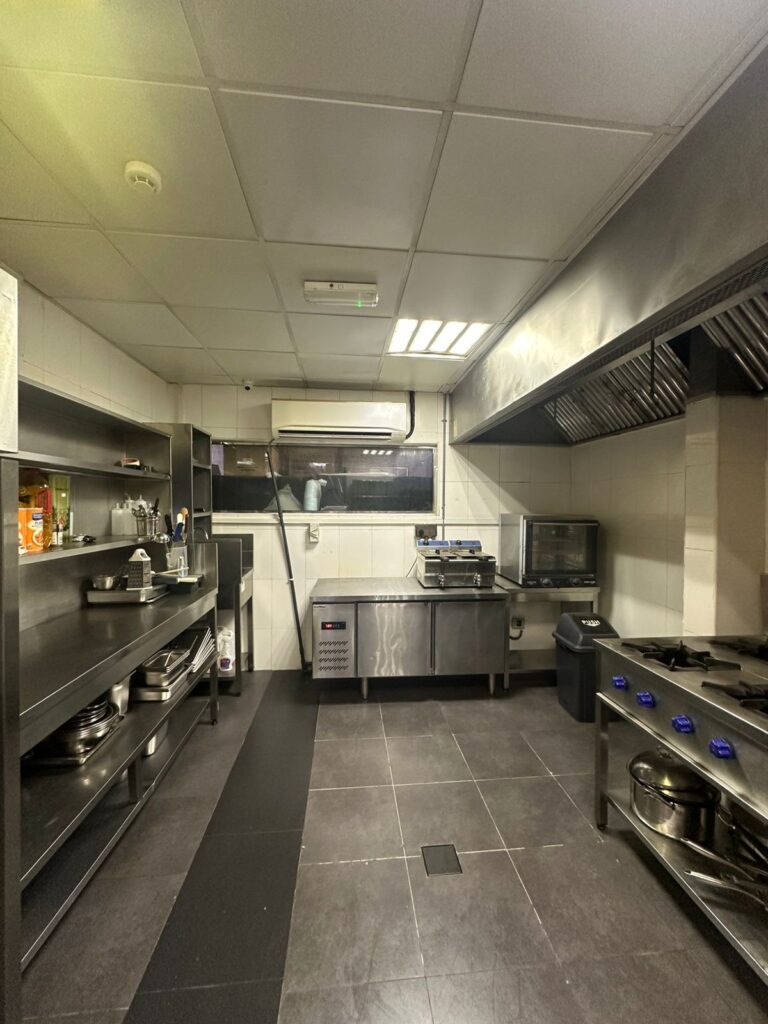
Artificial intelligence is no longer just a technology trend. It is becoming part of how restaurants operate, market themselves, understand customers, and manage costs.
In Dubai, where the food and beverage industry is highly competitive and increasingly digital, restaurant owners are looking beyond traditional methods to improve efficiency and deliver better customer experiences.
From AI-powered recommendations and automated customer support to smarter inventory management and personalized marketing, AI in restaurants in Dubai is opening new possibilities for both established restaurants and emerging food brands.
The UAE has also made artificial intelligence a strategic priority. Dubai’s AI blueprint aims to accelerate AI adoption across important sectors and increase productivity through digital solutions. In 2026, Dubai has continued to push the private sector toward AI adoption, including newer forms of “agentic AI” designed to perform tasks more independently.
For restaurant owners, the important question is no longer simply whether AI will affect the industry.
The real question is:
Can AI help you build a better restaurant?
The answer is yes—but only when technology is used to solve real business problems.
What Does AI Mean for the Restaurant Industry?
Artificial intelligence allows software to analyze information, recognize patterns, generate content, make recommendations and automate certain tasks.
For restaurants, that information can include:
- Customer orders
- Menu performance
- Sales patterns
- Inventory levels
- Customer reviews
- Marketing data
- Delivery information
- Customer preferences
- Peak ordering periods
- Food waste
- Operational data
Instead of relying entirely on guesswork, restaurant operators can use these insights to make faster and more informed decisions.
This is particularly useful for cloud kitchens and delivery-focused food brands, where customer data, order volume, delivery performance and menu optimization can directly influence profitability.
AI does not replace the chef, restaurant manager or entrepreneur.
Instead, it can become another tool in the business.
7 Ways AI Is Changing Restaurants in Dubai
1. AI Can Help Restaurants Understand What Customers Want
One of the biggest challenges for any restaurant is understanding customer preferences.
Why does one dish sell hundreds of times while another barely moves?
Why do customers order a particular meal during lunch but choose something completely different at night?
Which dishes encourage repeat orders?
AI can analyze large amounts of customer and sales data to identify patterns that may not be obvious to a restaurant owner.
For example, a delivery-focused food brand could discover that:
- Customers prefer smaller meal combinations during lunch.
- Certain dishes perform better on weekends.
- A particular side dish is frequently added to specific meals.
- Customers in one delivery area prefer healthier options.
- Certain promotions generate orders but reduce profitability.
These insights can help businesses improve their menus and marketing strategies.
The technology is already moving toward personalized food recommendations. At Gulfood 2026, AI-powered food technology was a notable theme, including solutions designed to understand consumer preferences and reduce food waste.
For a restaurant, the goal is simple:
Stop guessing what customers want and start learning from the data.
2. AI Can Make Restaurant Marketing More Personalized
Restaurant marketing has changed dramatically.
A restaurant no longer has to rely only on billboards, flyers or traditional advertising.
Today, food brands compete across:
- TikTok
- Food delivery platforms
- Search engines
- Loyalty programs
- Digital advertising
AI can help restaurant marketing teams create and analyze campaigns across these channels.
For example, AI tools can help generate:
- Social media ideas
- Ad variations
- Product descriptions
- Email campaigns
- Promotional messages
- Multilingual content
- Customer segments
- Marketing reports
This becomes especially valuable in Dubai’s multicultural market.
A food brand may need to communicate with customers in English and Arabic while also creating content that appeals to different customer segments.
AI can help create localized marketing variations faster.
However, there is an important difference between using AI to support marketing and simply publishing generic AI-generated content.
The strongest restaurant brands will still need authentic photography, real customer experiences, strong branding and human storytelling.
AI should make the marketing team faster—not make the brand feel robotic.
3. AI Can Help Restaurants Build Smarter Menus
Your menu is not just a list of dishes.
It is a business tool.
Every item has a cost, selling price, preparation time, popularity level and contribution to overall revenue.
AI can help restaurants analyze menu performance and identify opportunities.
Imagine a menu with 30 dishes.
After analyzing sales and customer behavior, the restaurant discovers:
- 8 dishes generate most of the orders.
- 5 dishes have high food costs.
- 4 dishes take too long to prepare.
- 3 dishes have low customer ratings.
- Several dishes are rarely ordered.
Instead of maintaining the same menu indefinitely, the business can test a more focused selection.
This can be particularly valuable for cloud kitchens.
A delivery-only brand does not necessarily need a huge menu.
A smaller, carefully designed menu can make purchasing, preparation, packaging and kitchen operations easier.
AI can help identify which products deserve more attention.
And this creates an important principle for modern food businesses:
More menu items do not automatically mean more profit.
4. AI Can Improve Inventory and Reduce Food Waste
Food waste is both an environmental problem and a financial problem.
Restaurants purchase ingredients before customers order them.
If demand is incorrectly estimated, businesses can end up with excess inventory, expired ingredients and unnecessary costs.
AI-powered forecasting can analyze historical sales and other operational information to estimate future demand.
For example, a system could identify that a restaurant usually sells:
- More breakfast items on weekdays
- More family meals on weekends
- Higher quantities of certain ingredients during promotions
- Fewer particular dishes during specific periods
This information can support better purchasing and preparation decisions.
The potential impact is significant.
Instead of asking:
“How much should we order?”
restaurant operators can increasingly ask:
“What does the data suggest customers are likely to order?”
Food technology companies showcased at Gulfood 2026 are already working on AI applications related to food preferences, efficiency and waste reduction.
For cloud kitchens operating multiple brands, smarter inventory management could become even more valuable because several menus may depend on overlapping ingredients.
5. AI Can Improve Customer Service and Ordering
Customers expect fast answers.
They may want to know:
- Is this dish vegetarian?
- Does it contain nuts?
- What are the ingredients?
- Can I customize my order?
- Which meal is best for two people?
- What is your delivery time?
- Where is my order?
AI-powered assistants can help answer routine questions quickly.
More advanced systems can potentially use customer information to provide recommendations.
For example:
Customer: “I want something high in protein but not too spicy.”
An AI-enabled ordering system could identify suitable menu options based on available product information.
This type of personalized interaction is already appearing in Dubai’s food scene. One 2026 Dubai café experience used AI-assisted ordering and allowed diners to enter dietary restrictions and allergies before receiving recommendations.
For restaurants, the opportunity is not necessarily to eliminate human service.
Instead, AI can handle repetitive questions while staff focus on more complex customer interactions.
6. AI Can Help Delivery-First Restaurants Operate More Efficiently
This is where AI becomes particularly interesting for cloud kitchens in Dubai.
A delivery-first food business has many moving parts:
Customer → Order → Kitchen → Preparation → Packaging → Delivery → Review → Repeat Order
A problem at any stage can affect the customer experience.
AI and automation can potentially help businesses analyze:
- Order volumes
- Preparation times
- Peak hours
- Product demand
- Delivery patterns
- Customer reviews
- Repeat purchases
- Marketing performance
- Operational bottlenecks
For example, if data shows that orders increase significantly between 7 PM and 9 PM, the kitchen can prepare staffing and inventory accordingly.
If one dish consistently causes preparation delays, the business can investigate the recipe, preparation process or menu positioning.
This is one reason technology can be particularly powerful in a commercial kitchen environment.
The kitchen becomes more than a place where food is prepared.
It becomes a data-driven production environment.
And as Dubai’s food delivery ecosystem continues to develop, operational efficiency becomes increasingly important for brands competing on speed, quality, and consistency.
7. AI Could Change How New Food Brands Are Created
Perhaps the most interesting change is happening before a restaurant even opens.
Traditionally, launching a food business could involve:
- Choosing a concept
- Creating a menu
- Finding a location
- Designing the restaurant
- Hiring staff
- Buying equipment
- Launching marketing
- Waiting to see what customers think
Today, entrepreneurs can use technology to test and validate ideas much faster.
AI can assist with:
- Market research
- Competitor analysis
- Menu brainstorming
- Pricing analysis
- Customer segmentation
- Branding concepts
- Marketing campaigns
- Content creation
- Sales analysis
That does not mean AI can guarantee that a food concept will succeed.
It cannot.
But it can help entrepreneurs make better decisions before investing heavily in a physical restaurant.
This is especially relevant to cloud kitchens in Dubai.
A food entrepreneur can potentially start with a focused concept, test demand, analyze customer response and improve the operation before considering a larger physical restaurant.
The business model becomes more flexible.
Does AI Mean Restaurants Will Need Fewer People?
Not necessarily.
This is one of the biggest misconceptions surrounding restaurant technology.
AI can automate certain repetitive activities, but restaurants still depend heavily on people.
Chefs create food.
Managers solve operational problems.
Staff maintain quality.
Customer service teams handle complicated situations.
Entrepreneurs create concepts and build brands.
AI can support these people.
It does not automatically replace them.
The more realistic future is likely to be a combination of human hospitality + intelligent technology.
A chef should not have to spend hours analyzing spreadsheets when software can identify sales patterns.
A restaurant manager should not have to manually answer the same basic customer question hundreds of times.
A marketing manager should not have to create every campaign variation manually.
Technology can take care of repetitive work while people focus on decisions that require creativity, judgment, and relationships.
AI + Cloud Kitchens: A Powerful Combination for Dubai
The relationship between AI and cloud kitchen technology could become particularly important.
A cloud kitchen already operates differently from a traditional restaurant.
There may be:
- No traditional dining room
- Multiple brands in one facility
- Delivery-focused menus
- Digital ordering
- Centralized production
- Shared equipment
- Data-driven sales monitoring
Adding AI to this environment creates another layer of efficiency.
Imagine a commercial kitchen where technology helps operators understand:
What should we prepare?
When should we prepare it?
Which brand is performing best?
Which menu items should we promote?
Which ingredients are moving slowly?
Which customers are most likely to reorder?
Where are operational delays happening?
That is where the idea of the smart commercial kitchen becomes interesting.
The future may not simply be about having better cooking equipment.
It may be about connecting the kitchen, menu, customer, marketing, and business data into one intelligent operating system.
Dubai Is Becoming a Strong Environment for AI-Powered Food Businesses
Dubai’s wider technology strategy makes this trend particularly relevant.
The UAE has positioned AI as a strategic area for economic development, while Dubai’s AI blueprint focuses on accelerating AI adoption and using digital solutions to increase productivity.
In 2026, the UAE also introduced a national AI charter focused on responsible AI development and use, including privacy, data security, transparency, accountability and innovation.
This means businesses should not look at AI simply as a marketing buzzword.
They should think about how to use it responsibly and practically.
For food businesses, that could mean using technology to improve forecasting, customer experiences, operations and decision-making while maintaining appropriate controls around customer and business data.
The Future of Dubai Restaurants May Be Human + AI
AI will not make great food.
A chef will.
AI will not create a memorable brand by itself.
An entrepreneur will.
AI will not replace genuine hospitality.
People will continue to value human experiences.
But AI can help the people behind a restaurant make better decisions, reduce repetitive work, understand customers and operate more efficiently.
That is why the future of restaurants is unlikely to be simply “AI restaurants.”
It will probably be restaurants powered by AI behind the scenes.
And in a competitive market like Dubai, that difference could matter.
Final Thoughts
The restaurant industry is entering a period where technology is becoming part of everyday operations.
From personalized recommendations and smarter menus to inventory forecasting, customer service and delivery optimization, AI in restaurants in Dubai is moving from an experimental idea toward a practical business tool.
For food entrepreneurs, the opportunity is not to replace the human side of hospitality.
It is to remove unnecessary friction from the business.
A successful food brand of the future could combine the creativity of a chef, the vision of an entrepreneur, the efficiency of a professional commercial kitchen, and the analytical power of AI.
That combination could create a completely different type of restaurant.
Smaller. Smarter. Faster. More flexible. And built around what customers actually want.
Frequently Asked Questions
Is AI being used in restaurants in Dubai?
Yes. AI is increasingly appearing in areas such as customer recommendations, digital ordering, marketing, operational analysis and restaurant technology. Dubai is also actively encouraging wider AI adoption across the private sector.
How can AI help a restaurant?
AI can help analyze customer behavior, optimize menus, forecast demand, support marketing, answer routine customer questions, identify operational problems, and improve inventory planning.
Can AI reduce restaurant food waste?
AI can potentially reduce waste by helping businesses forecast demand, understand purchasing patterns and identify products or ingredients that are not moving efficiently.
Can AI replace restaurant staff?
AI can automate some repetitive tasks, but restaurants still require chefs, managers, service teams, and entrepreneurs. The strongest use of AI is generally to support employees rather than simply replace them.
Can AI help a cloud kitchen?
Yes. Cloud kitchens can potentially use AI to analyze orders, menu performance, demand patterns, customer behavior, inventory and operational efficiency.
Is AI expensive for a small food business?
The cost varies significantly depending on the technology. Small businesses can begin with relatively simple AI-assisted tools rather than investing in complex automation systems.
What is the future of AI in the Dubai restaurant industry?
AI is likely to become increasingly integrated into restaurant marketing, customer service, demand forecasting, personalization, inventory management, and operational decision-making as Dubai continues to accelerate AI adoption.