Table of Contents
- Introduction: The Real Cost of Ignoring Energy Efficiency
- Why Energy Optimization Matters in Cloud Kitchens
- Best cloud kitchen power saving tips
- Tip #1: Conduct an Energy Audit (Your First Step Toward Savings)
- Tip #2: Optimize Equipment Layout for Power Efficiency
- Tip #3: Invest in Energy-Efficient Appliances
- Tip #4: Schedule Smart Operating Hours and Maintenance
- Tip #5: Upgrade Kitchen Lighting Systems
- Tip #6: Manage HVAC and Ventilation Smartly
- Tip #7: Train Staff on Daily Energy Habits
- Tip #8: Use Renewable Energy Sources When Possible
- Tip #9: Implement Real-Time Monitoring Tools
- Tip #10: Create a Long-Term Energy Efficiency Culture
- Key Takeaways
- Final Thoughts
- FAQ
Introduction: The Real Cost of Ignoring Energy Efficiency
Energy bills are one of the largest ongoing expenses for food businesses, often second only to rent. For delivery-only restaurants, or cloud kitchens, this cost can silently drain profits every month. That’s why learning and applying cloud kitchen power saving tips is no longer optional — it’s essential for survival and sustainability.
A single oven left running for hours, or poorly maintained refrigeration units, can add thousands of dirhams to your annual energy costs. In Dubai and other high-temperature regions, constant cooling needs make efficient power management even more critical.
Whether you manage a single brand or operate multiple virtual restaurants, improving energy efficiency helps you reduce waste, comply with green regulations, and build a reputation as an eco-conscious business.
Let’s explore the most effective cloud kitchen power saving tips that lower operating expenses while boosting productivity and brand credibility.
Why Energy Optimization Matters in Cloud Kitchens
The food delivery industry runs on speed and precision, but behind every successful order lies significant power consumption — from ovens and fryers to chillers and air-conditioning.
By adopting energy-efficient practices, cloud kitchens can:
- Reduce electricity costs by 15 – 30% annually.
- Improve equipment longevity and reliability.
- Enhance sustainability credentials to attract investors and eco-aware customers.
Ignoring efficiency not only inflates your monthly bills but also weakens competitiveness in a market where margins are already thin.
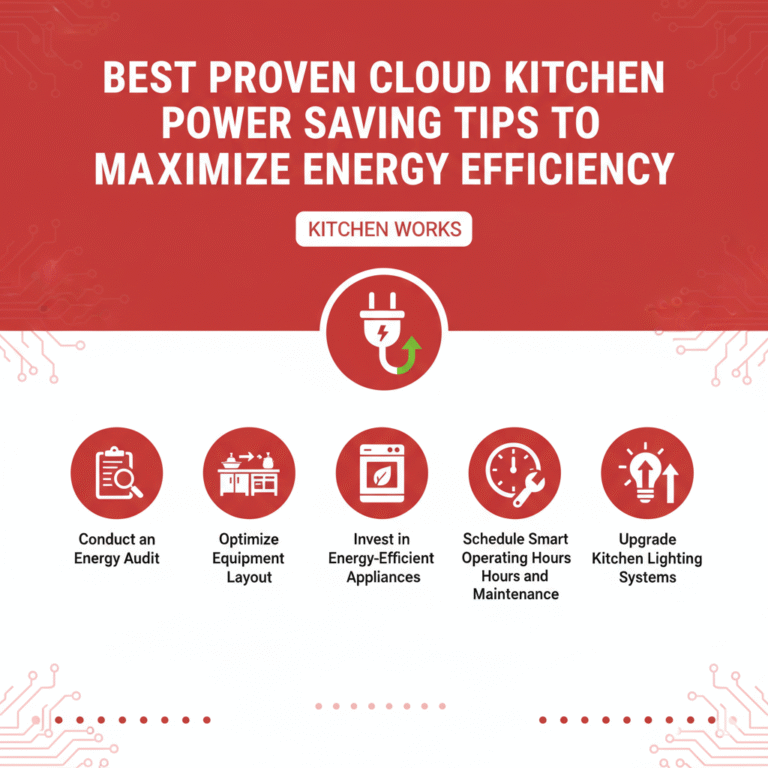
1) Conduct an Energy Audit (Your First Step Toward Savings)
Start your energy-saving journey with a detailed power audit. This reveals where electricity is wasted and highlights improvement opportunities.
Action Steps:
- Measure consumption across all appliances for one week.
- Identify idle equipment and unnecessary standby power.
- Hire a certified energy auditor for professional analysis.
A clear baseline ensures your cloud kitchen power saving tips are measurable and effective.
2) Optimize Equipment Layout for Power Efficiency
Poorly planned layouts force equipment to work harder. For instance, placing freezers beside fryers increases power demand.
Fix It:
- Separate hot and cold zones.
- Ensure airflow between machines to avoid overheating.
- Position high-use appliances near electrical sources to reduce voltage drop.
Strategic layout design can save up to 10% in energy consumption.
3) Invest in Energy-Efficient Appliances
The most reliable cloud kitchen power saving tips involve upgrading to certified energy-efficient equipment.
Best Practices:
- Look for Energy Star-rated or equivalent appliances.
- Replace old fryers, ovens, and chillers with modern, insulated models.
- Install induction cooktops for faster, cleaner energy use.
While the initial cost may be higher, the long-term savings and reduced maintenance make it worthwhile.
4) Schedule Smart Operating Hours and Maintenance
Idle equipment wastes energy.
Implement Smart Scheduling:
- Turn on heavy-load machines only during prep or peak hours.
- Switch off idle exhaust fans or lights when not needed.
- Regularly clean filters, coils, and fans to maintain efficiency.
Following this cloud kitchen power saving tip can cut daily energy consumption by 5 – 8%.
5) Upgrade Kitchen Lighting Systems
Lighting accounts for nearly 15% of total energy use in many kitchens.
Apply These Fixes:
- Replace all fluorescent bulbs with LEDs.
- Use motion sensors in storage and corridor areas.
- Install daylight sensors near windows to auto-adjust brightness.
These small upgrades deliver quick ROI and improve workplace comfort.
6) Manage HVAC and Ventilation Smartly
In hot climates like the UAE, HVAC systems can consume 30–40% of total power.
Energy-Smart Steps:
- Clean filters monthly to improve airflow.
- Seal air leaks and insulate ducts.
- Set thermostats between 24 – 26 °C during working hours.
- Install variable-speed exhaust fans to match workload.
This cloud kitchen power saving tip keeps both air quality and budgets balanced.
7) Train Staff on Daily Energy Habits
Even the best technology fails if staff waste energy unknowingly.
Training Essentials:
- Teach team members to turn off unused appliances.
- Encourage batch cooking to minimize reheating.
- Create an energy checklist for opening and closing shifts.
Employee awareness is the backbone of any power-saving strategy.
8) Use Renewable Energy Sources When Possible
Many UAE commercial facilities are adopting solar energy.
Advantages:
- Reduced dependence on grid electricity.
- Long-term cost stability.
- Improved sustainability image.
Installing rooftop solar panels or joining a shared energy program aligns with modern cloud kitchen power saving tips focused on eco-efficiency.
9) Implement Real-Time Monitoring Tools
IoT-enabled smart meters provide instant insight into where power is wasted.
Steps:
- Install smart plugs and energy dashboards.
- Monitor peak-hour usage trends.
- Automate shutdowns for idle appliances.
Real-time data allows quick corrective action before bills skyrocket.
10) Create a Long-Term Energy Efficiency Culture
The most powerful of all cloud kitchen power saving tips is turning efficiency into company culture.
How:
- Celebrate monthly energy-saving achievements.
- Reward teams that hit efficiency goals.
- Review consumption reports quarterly to set new targets.
Sustained awareness ensures savings compound year after year.
Key Takeaways
- Conduct energy audits regularly.
- Upgrade to energy-efficient equipment.
- Maintain HVAC and refrigeration systems.
- Train staff to conserve energy daily.
- Use monitoring tech for data-driven decisions.
Implementing even half of these cloud kitchen power saving tips can reduce electricity costs by 25 % and boost your kitchen’s overall performance.
Final Thoughts
Energy efficiency is not just a sustainability buzzword — it’s a profit strategy. Every kilowatt saved adds directly to your bottom line.
By following these cloud kitchen power saving tips, you’ll cut costs, enhance operational reliability, and future-proof your business against rising energy prices.
👉 Ready to make your kitchen energy-smart?
Contact our commercial kitchen consultants today for a free power-saving audit and customized plan to optimize your operations.
Frequently Asked Questions (FAQs)
1. What are the best cloud kitchen power saving tips?
The best cloud kitchen power saving tips include conducting regular energy audits, switching to LED lighting, maintaining HVAC systems, using energy-efficient appliances, and training staff on daily energy habits. Small operational changes can lead to significant long-term savings.
2. How can I reduce my electricity bill in a commercial or cloud kitchen?
To reduce electricity bills, monitor appliance usage, turn off idle equipment, optimize kitchen layout, and adopt solar energy where possible. Regular maintenance of refrigerators, fryers, and exhaust systems prevents energy wastage. These are the best Cloud kitchen power saving tips.
3. Why is energy efficiency important for cloud kitchens in Dubai or the UAE?
Energy efficiency directly impacts profitability in Dubai’s high-utility-cost environment. Implementing cloud kitchen power saving tips helps lower bills, extend equipment lifespan, and promote eco-friendly operations, aligning with UAE sustainability goals.
4. What energy-efficient appliances are recommended for cloud kitchens?
Choose Energy Star-rated ovens, chillers, fryers, and induction cooktops. Smart, programmable devices reduce idle energy use and allow better temperature control, saving both energy and maintenance costs.
5. How do staff habits affect energy consumption in cloud kitchens?
Staff habits play a major role in kitchen energy efficiency. Turning off unused lights and appliances, batch cooking, and following maintenance schedules can save up to 10–15% of total power consumption.